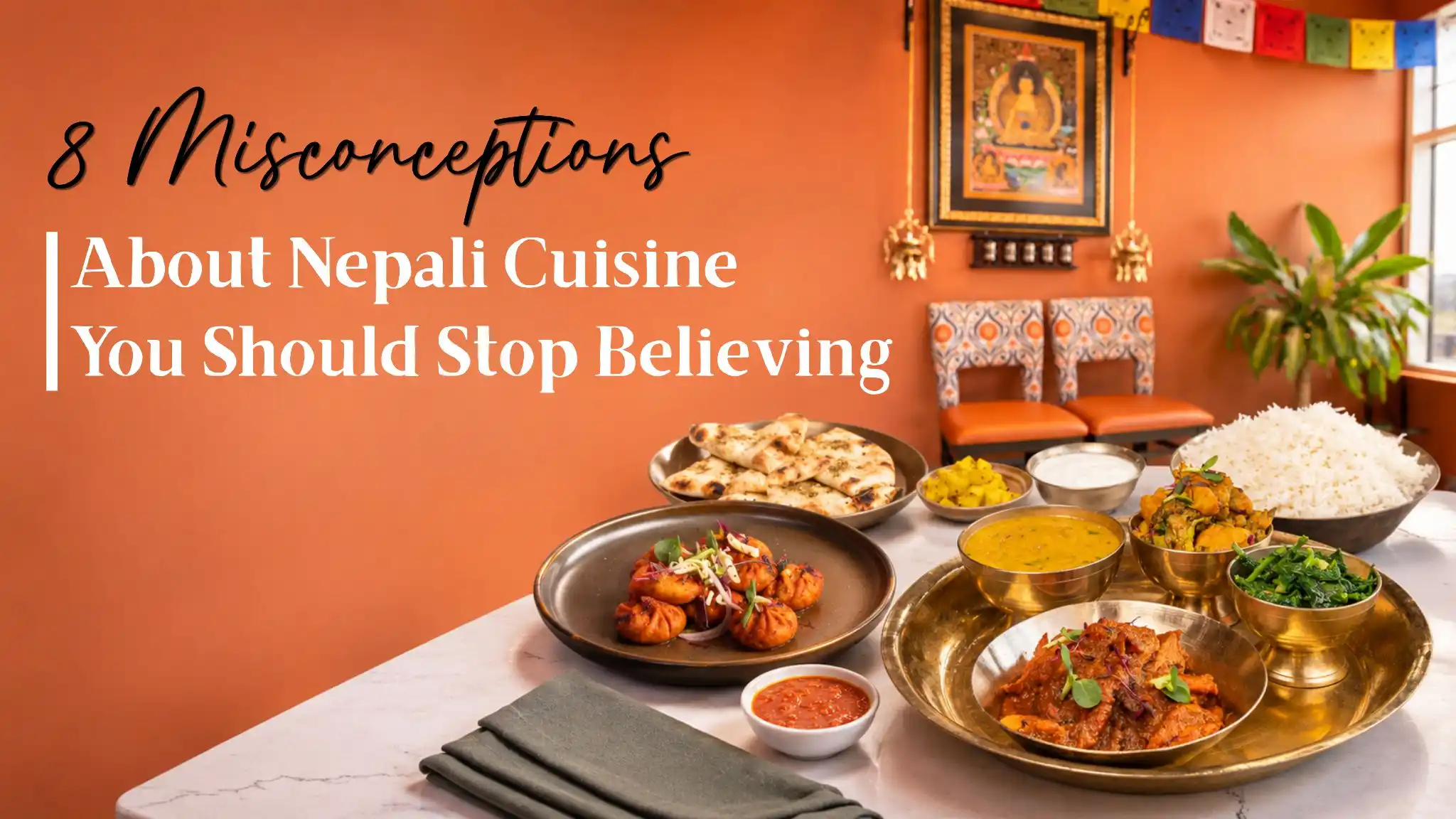
A country's food culture cannot be understood through just a handful of popular dishes. The same is true of Nepal, where food traditions change across regions and communities. For example, food traditions in the Kathmandu Valley differ from those in Himalayan communities and the Terai plains. These differences can be seen in the ingredients, cooking methods and dishes enjoyed in each region.
Yet, many people still associate Nepali cuisine with just a few familiar dishes like momos or dal bhat. This has led to several misconceptions about its flavours, ingredients and traditions.
For people exploring restaurants in Cochrane Alberta, knowing these misconceptions can make trying Nepali cuisine more interesting. Let's take a closer look.
8 Misconceptions About Nepali Cuisine That You Should Not Believe
Nepali cuisine is often judged by a small selection of familiar dishes, leaving many of its regional preparations and food traditions unexplored. In the following points, we'll debunk eight common misconceptions and look at what Nepali food is really like.
-
Myth: Nepali Cuisine Is Just Another Version of Indian Food
Nepal and India share a border, so their cuisines naturally share some similarities. Both use ingredients such as rice, lentils, ginger, garlic and spices; their food traditions aren't interchangeable.
Nepali cuisine has its own regional dishes and preparation methods. Tarua, for example, is a vegetable fritter popular in parts of the Terai and eastern Nepal. Shyakpa is a Himalayan meat stew traditionally associated with Sherpa communities, while sekuwa is prepared by grilling marinated meat.
These dishes reflect food traditions that cannot simply be grouped under Indian cuisine. Shared ingredients don't make two cuisines the same.
-
Myth: All Nepali Food Is Extremely Spicy
Nepali food uses spices, but that doesn't mean every dish is hot. There is a difference between a dish being flavourful and being loaded with chillies.
Ginger, garlic, cumin, coriander and turmeric help build flavour in many recipes. Chillies are also used, but the amount depends on the dish and how it's prepared.
Momos are a good example. Steamed dumplings have their own flavour, while dipping sauces such as chilli chutney or jhol sauce add another layer of taste. Diners can also ask about the spice level before ordering.
Some Nepali dishes are certainly hot, but spice levels vary. So, if you usually prefer mild food, do not let the fear of spice stop you from exploring Nepalese cuisine. You can always ask the restaurant staff about the heat level before ordering.
-
Myth: Nepali Food is Just Momos and Dal Bhat
Momos and dal bhat are well-known Nepali dishes, but they don't represent the entire cuisine. Focusing only on these two dishes means missing out on many other traditional preparations.
Nepali cuisine has much more to offer than momos and dal bhat. Here are a few other dishes that show the variety of Nepali cooking:
-
Thukpa: A comforting noodle soup prepared with broth, vegetables, and sometimes meat. It’s a great choice when you want something warm and satisfying.
-
Shyakpa: A hearty Himalayan-style stew associated with Sherpa food traditions. It combines meat and vegetables in a comforting preparation.
-
Sekuwa: A traditional Nepalese grilled meat dish known for its seasoning and smoky flavour.
-
Tarua: Vegetable fritters associated with Eastern Nepal, usually enjoyed as a snack or side dish.
-
Nepali Thali: A traditional meal platter that brings together rice, lentils, seasonal vegetables, pickle and other accompaniments.
There are also different ways to prepare familiar dishes. For instance, momos can be steamed, served in a sauce or fried. Exploring these preparations and regional specialities gives a better idea of how varied Nepali cuisine really is.
-
Myth: Every Region Has One Uniform Cooking Style
Nepal's geography plays an important role in its food culture. The ingredients available in the Himalayan mountains are not always the same as those found in the hills or the southern Terai plains.
Local communities have developed their own ways of preparing food using ingredients available in their surroundings. For example, Himalayan food traditions include hearty soups and stews, while Terai cooking features preparations such as tarua, made with vegetables coated in spiced batter and fried.
Food habits also differ in the Kathmandu Valley, where traditional dishes such as yomari and bara are part of local food culture.
This is why one Nepali meal cannot represent the cooking traditions of the entire country. Staple ingredients, cooking methods and popular dishes vary across regions and communities.
-
Myth: Nepalese Food is Entirely Vegetarian
Rice, lentils and vegetables are important parts of many Nepali meals, but that doesn't mean the entire cuisine is vegetarian. Many traditional dishes also use meat. Goat, chicken, pork and other meat appear in different regional and community food traditions.
Dishes such as sekuwa, choila and sukuti show how meat is prepared using grilling, marinating, roasting and drying techniques. At the same time, vegetarian preparations remain an important part of Nepali cooking.
No single diet represents everyone in Nepal. Both vegetarian and meat-based dishes are part of Nepali food culture.
-
Myth: Nepali Cuisine Is Too Unfamiliar for First-Time Diners
Some Nepali dish names may be unfamiliar, but the ingredients are often easy to recognise. Momos are similar in concept to other dumplings, thukpa is a noodle soup, and a Nepali thali brings rice, lentils, vegetables and accompaniments together on one platter.
Many everyday ingredients are also familiar to people who enjoy South Asian food. Potatoes, lentils, eggplant and seasonal vegetables appear in many preparations, while spices and cooking methods give each dish its own flavour.
You do not need prior knowledge of Nepali food to enjoy it. Choosing a dish with ingredients you already like is a simple way to begin.
-
Myth: Nepali Food is Bland and Repetitive
This misconception often comes from thinking that Nepali meals consist only of plain rice and lentils. However, the accompaniments and preparations served alongside them can make a big difference.
A meal may include seasonal vegetable curry, fermented greens, pickles, fresh chutneys and different spice combinations. Ingredients such as ginger, garlic, timmur and other local herbs also contribute to the flavour of particular dishes.
Preparation methods make a difference, too. Roasted ingredients add a smoky taste, fermented vegetables bring tang, and freshly prepared pickles and chutneys add their own mix of spice and acidity.
Nepali cooking is not limited to one flavour or preparation style.
-
Myth: Nepali Food Is Always Heavy and Greasy
Some Nepali dishes are hearty, especially meat-based stews and larger traditional meal platters. However, that does not mean every dish is rich or oily.
The cuisine also includes steamed momos, lentil soups, vegetable preparations and noodle soups. These offer different textures and meal experiences without relying on heavy sauces.
For example, thukpa is served as a noodle soup with broth and vegetables, while steamed momos offer a different preparation from their fried versions. The dish type and preparation method shape the overall meal.
Where Can You Experience Nepali Cuisine in Cochrane, Alberta?
If you want to experience Nepali cuisine in Cochrane and are exploring restaurants with some of the best food in Cochrane, Aama Nepalese Cuisine is worth trying.
One of the best ways to understand a cuisine is to try dishes beyond the most familiar options. At Aama, you can explore different Nepalese preparations, including momos, tarua, sekuwa, shyakpa and traditional Nepali thali. Each dish offers something different in terms of ingredients, preparation and flavour.
You can also find vegetarian options such as paneer chilli, tofu vegetable chowmein, roast eggplant and traditional vegetarian Nepali thali. This gives diners a chance to explore different parts of Nepalese cooking, even if they prefer meat-free meals.
If you're also comparing the best lunch places near Cochrane, consider the type of food and variety available on the menu, not just familiar restaurant choices. Exploring a different cuisine can make your next lunch outing more interesting.
Trying these dishes is a great way to see that Nepali cuisine isn't limited to momos and dal bhat. It has a wider variety of regional specialities, cooking styles and flavour combinations worth discovering.
Conclusion
Trying a new cuisine can change how you think about familiar ingredients and flavours. The way food is seasoned, prepared and served can make a bigger difference than you might expect. Nepali cuisine is a good example of how food traditions can vary across communities, even within the same country.
So the next time you're exploring places to eat for lunch in Cochrane, be open to trying something different instead of sticking to what you already know. You may find the cuisine offers more than you expected.
Frequently Asked Questions
- Is Nepali Cuisine Different From Himalayan Cuisine?
-
Nepali cuisine is one of several distinct food traditions within the wider Himalayan region. Himalayan food culture also includes traditions from parts of India, Tibet, Bhutan and other neighbouring areas. Nepali cuisine specifically reflects the food, ingredients and cooking traditions of Nepal.
- Is Nepali Food Suitable for People Who Prefer Mild Flavours?
-
Yes. Not every Nepali dish contains a high amount of chilli. Many dishes focus on the flavour of their main ingredients, herbs and aromatic spices. If you prefer mild food, you can ask about the preparation and spice level before ordering.
- Do All Regions of Nepal Eat the Same Food?
-
No. Food habits vary across Nepal because of differences in geography, climate, local ingredients and cultural traditions. Communities in the Himalayan region have different food practices from those in the hills and Terai plains. This also influences the dishes prepared and ingredients commonly used.
- What is the most popular traditional Nepali dish?
-
Momos are among the most widely recognised Nepalese dishes. Other well-known foods include dal bhat, thukpa, sekuwa, and different regional specialities.